From the “This Is a Terrifying Study” Files…

Image via Shutterstock

Image via Shutterstock


Hitmen succeed in contract killing where they successfully bury any feelings or emotions, a study into the psychology of novice assassins has found. Hired killers who consider themselves strategists or businessman, doing ‘just a job’ as one hitman described it, can convince themselves they are dealing with a target rather than a person, research by a team of criminologists revealed.  Read More

Wow. I’d love to see the Craig’s List ad soliciting people for this research project. On second thought, no.  No I wouldn’t.

Mother or Martyr? 3 Steps to Beating “Perfect Mommy Syndrome”

Image via Shutterstock.  Used with permission.

Image via Shutterstock. Used with permission.

I regularly read blog posts from really great moms who tell some pretty disturbing stories of the things they put themselves through to try to attend to their children. All of the stories tend to follow the “I thought the only way to be a good mom was to do X, Y, and Z until I made myself sick because some expert/my friends/my mom group/some blog told me I had to do it that way and it almost destroyed my life and my relationships”  narrative.

Inevitably, these posts end with the blogger saying, “parenting style X thinks its ‘all that’…but its not!”   And concludes that it was really  X parenting style’s fault all along for selling the genuinely well-intentioned mom a bill of goods.   Now, because of my personal interests, I usually see posts like this attacking attachment parenting as being the offending philosophy but I’ve also seen plenty of posts from moms who allowed themselves to be driven crazy from sleeplessness by trying to ferberize their babies (i.e., letting them “cry it out”), or put their baby on a feeding schedule that jeopardized the child’s health because they were adhering to it too rigidly,  or a million other problems caused, not by the chosen parenting style, per se, but something else entirely.

Mommy Enemy #1

I actually appreciate these moms sharing their journeys and I think there is much to recommend in their posts.  Their experiences are truly valuable.  But the one thing that many of these posts miss is that the underlying problem was never the parenting style that the person was adhering to, but the perfectionism driving the particular mom’s approach to applying that parenting style.

Mom’s (& Marriage) Needs Matter

I am an unapologetic advocate of attachment parenting.  I believe there is a strong case to be made from both science and theology that of all the parenting styles that are available, attachment style parenting practices, including nursing on request, co-sleeping, baby-wearing, and loving-guidance approaches to discipline are the most scientifically valid and theologically congruent (from a Catholic anthropological perspective) approaches available for parents and their babies. That said, every parent needs to use their good sense in applying any parenting approach sanely, in a manner that respects both their well-being and that of the people around them.  For instance, in Lisa’s and my book, Then Comes Baby: The Catholic Guide to Surviving and Thriving in the First Three Years of Parenthood we write…

…if parents allow themselves to become burned out by doing attachment parenting practices, they don’t work nearly as well (Moran, Forbes, Evans, et al, 2008; DeWoolf & van Ijzendoom, 1997; Owen & Cox, 1997). Babies—and really, most people—seem to be wired to be more sensitive to how things are done than that they are done. If a parent neglects self-care to the point that he or she feels fried, frustrated, and fed-up with parenting or with the child, the benefit to the social brain of attachment-based approaches is actually less than if the parent employed more conventional parenting practices such as bottle feeding and crib sleeping and was able to interact with the child more contentedly. This seems to have to do with the amount of eye-contact and animation the parent expresses toward the child.   You can do all the “right things” associated with baby-centered practices, but if your heart isn’t in them, if you are just doing them because some expert told you that should in order to be a good parent then that disconnection shows on your face and in your interactions with your child. As a result, the baby senses the disconnect, becomes distressed, and his or her brain locks down. Dr. Ed Tronick’s famous “Still Face Experiment” dramatically illustrates this dynamic.  (Click to see a video demonstrating this experiment which shows a baby moving from animated and bubbly to stressed and depressed in less than 10 minutes because of his mother’s out-of-sync facial expressions.)

…Pope John Paul II’s theology of the body reminds us that we are not just spiritual creatures capable of doing all things without experiencing limitations or break-downs. We are bodily beings who must work within and acknowledge both the blessings and the limitations of our bodies. Saying that we “should” be capable of more is irrelevant if we are not, actually, physically, capable of more without jeopardizing our health and well-being. If our need for sleep, or nourishment, or intimate connection with our spouse is not just being tested—as  parenting tends to do—but stretched to its breaking point, that’s not good for mom, dad, or baby. That’s why parents need to constantly seek creative ways to get time for themselves and their marriage. Taking regular, small steps to take care of yourself and your relationship (e.g., napping when baby naps, making sure to find time as a couple to talk and pray at some point every day) will prevent you from having to take larger, more disruptive actions (e.g., an entire day for me-time, a weekend away with your spouse) to put your mental, physical, and relational health back in order. This creative balancing act is what living out the principle of the “common good” means in family life and it is the key to creating an enjoyable family life where everyone’s needs are met including yours.

The Catholic principle of “the common good” means that everyone who has needs has a right to have those needs met.  Pursuing the common good requires Catholic parents to be both sensitive to the needs-in-play today, and creative about meeting everyone’s needs in a manner that doesn’t shortchange baby but doesn’t leave the adults to fend entirely for themselves. This takes sensitivity, prayer, communication, and commitment on the part of both parents. 

Perfect Mommy Syndrome: What’s the Cause?

The fact is, the problem I call Perfect Mommy Syndrome isn’t caused by parenting style–any parenting style.  It is caused when a mom tries to get her needs for personal and emotional validation met through her particular parenting approach–whatever that approach might be.  Moms who get caught in this trap truly mean well–very well–but in reality, for “perfect mommies,” parenting isn’t really about taking care of the baby. It’s about parenting their own, inner-child through their child.  Ultimately, Perfect Mommy Syndrome is about getting the emotional validation they were lacking in their own childhood by trying to be “perfect” moms who can both win the approval of the people around them and raise a “perfect child” who will prove that they have been good-enough all along despite what their families-of-origin tried to tell them.  Perfect Mommy Syndrome is, ultimately, a mom’s own anxious/insecure attachment style being expressed through her attempts to mother.  The following is a good description of anxious-attachment style that feeds Perfect Mommy Syndrome….

As adults, [people with an anxious-attachment style] are self-critical and insecure. They seek approval and reassurance from others, yet this never relieves their self-doubt. In their relationships, deep-seated feelings that they are going to be rejected make them worried and not trusting. This drives them to act clingy and overly dependent with their partner. These people’s lives are not balanced: their insecurity leaves them turned against themselves and emotionally desperate in their relationships.  Adults with preoccupied attachment patterns are usually self-critical, insecure and desperate, often assuming the role of the “pursuer” in a relationship. They possess positive views of other people, especially their parents and their partner, and generally have a negative view of themselves. They rely heavily on their partner to validate their self-worth. Because they grew up distrustful of their inconsistent, unavailable caregivers, they are “rejection-sensitive.” They anticipate rejection or abandonment and look for signs that their partner is losing interest.   These people are often driven to engage in pre-emptive strategies (Popcak Note: such as extreme approaches to parenting) in an attempt to avoid being rejected. However, their excessive dependency, demands and possessiveness tend to backfire….  (Click here for more info on the anxious attachment style)

The Cure

So what’s a mom to do?  Three things.

1.  Choose a parenting method that makes the most sense to you and stick with it.  Don’t just do what validates your biases, really research your decision.  But having made a choice, trust your judgment. Consistency is key with parenting.  Over time, you can adjust things here and there to suit the circumstances of your life, but resist the temptation to throw an entire method of parenting out the door unless you’ve gotten professional advice to do so.  Remember that for most parenting approaches (and this doesn’t just apply to my preferred parenting methods) if you’re seeing a problem, chances are, its your mindset more than it is the method.  Small, incremental changes are best for both you and your child.

2.  Listen to your baby, your body and your relationships.  If any of these things are out-of-balance, take small steps, early on, to avoid bigger problems down the road.  Perfect Mommies never see the line that everyone else knows can’t be crossed without burning out.  They think that if they just keep pushing though, everything will get better and they will be able to prove that they really are good-enough after all.  This ALWAYS, ALWAYS, ALWAYS makes things worse.  Address concerns before they become problems and problems before they become crises.

3.  Get help.  If you recognize yourself in the above description of anxious attachment, get professional help especially if you are pregnant, a new mom, or burning out on motherhood.  Yes, I know, getting help goes against everything you pride yourself on, but its that pride that will be your undoing.  Talk to a faithful counselor who can help you find healthy ways to heal your own attachment wounds so that you can parent your actual child instead of trying to parent your inner-child through your child.

The reality is no mom is a perfect mom, no child is a perfect child, and there is no perfect way to parent.   That doesn’t mean that some parenting methods aren’t objectively better than others, but it does mean that you can never prove that you are good-enough by trying to find exactly the right way to do everything just-so.   Stop looking to external sources to validate you.  Seek the help that will allow you to love yourself so that you can authentically love your children and everyone else in your life besides.  For more information on finding a healthy, graceful balance between babycare, mommy care, and marriage care, check out Then Comes Baby: The Catholic Guide to Surviving and Thriving in the First Three Years of Parenthood or contact the Pastoral Solutions Institute today.


Silencing The Inner-Critic: 4 Keys to Loving Yourself

Image via Shutterstock.  Used with permission.

Image via Shutterstock. Used with permission.

It can be hard to love ourselves.

Many of us are afraid that loving ourselves will make us narcissistic and selfish.  Many others of us have too hard a time getting past our inner-critics to even try to figure out what it means.

Despite popular fears to the contrary, loving ourselves is an essential ingredient in being a truly moral person.  As Jesus, himself, observed, the Golden Rule states that we must love others as we love ourselves (Mk. 12:31). Perhaps the reason the people seem to struggle so mightily to love one another is that most people don’t have an adequate sense of what it means to properly love themselves

Love Defined

To love someone means that we are committed to working for their good.  To love ourselves is to be similarly committed to working for our own good.   St. John Paul the Great’s Theology of the Body teaches that authentic love must be free, total, faithful & fruitful.  This usually refers to the love between man and woman, but I think these terms can also be applied to a healthy love of self as well. The following description of the four keys to loving oneself properly are taken from my new book, Broken Gods:  Hope, Healing and the Seven Longings of the Human Heart (in stores June 2, PRE-ORDER TODAY!).  I hope you find them helpful in your journey toward greater self-acceptance.

4 Keys To Loving Yourself

I will love myself freely.  I commit to working for my good without reservation, without grumbling.  I will not hold back in my efforts to challenge myself to open my heart wide to receive the transformation God wishes to give me and to cooperate to the best of my ability with his grace at all times.

I will love myself totally. While there are parts of myself that are hard to like, I will not turn away from them.  I will celebrate the fact that I am fearfully and wonderfully made (Ps 139:14), that I am good (Gen. 1:31), and that God has great things in store for me (1 Cor 2:9).  I will fearlessly cooperate with God’s grace and strive for greatness so that every part of me, especially the parts of me I like the least, may be transformed and bear witness to the wonders God can do.

I will love myself faithfully.  Even on the days I want to give up on myself I will continue to fight the good fight (2 Tim 4:7).  I reject self-criticism and false guilt and any movement of the spirit that tries to separate me either from the love of God or his ability to  fulfill the incredible plans he has for my life (2 Cor 10:5).    On the days I can no longer believe in myself, I will cling to the knowledge that God believes in me.  On the days that I cannot count on my own strength, I will rely on his.  I will not beat myself up for my weakness.  Rather,  I will boast in the power of God (1 Cor 1:31) to raise me up from weakness to glory.

I will love myself fruitfully.  I will rejoice in the good things God does in and through me.  I will look for ways to be a blessing to others.  I will share the blessings God has given me and I will proclaim the good he has done for me (Ps 116:12) that others might be inspired by the wonders God is working in me.

 Be Not Afraid!

This is the attitude we aspiring mystics must adopt as we face even the darkest parts of ourselves and our frustrated efforts to heal.  Not fear, anger and condemnation, but the free, total, faithful and fruitful Love that enables us to rejoice in our failings because of God’s immeasurable mercy and love and, in turn,  be transformed by the power of his infinite grace.    To learn more about how you can learn to love yourself as God loves you, check out Broken Gods: Hope, Healing, and the Seven Longings of the Human Heart.

Popcak masterfully reveals how even our darkest desires ultimately point to something beautiful, to a destiny beyond our wildest dreams, and he offers a powerful, practical plan for readers to fulfill God’s ultimate vision for their lives.  A must-read for anyone who wants to live the redemption Christ won for us!”  -Christopher West, Founder & President, The Cor Project  Author, Fill These Hearts: God, Sex, & the Universal Longing

God Wants to Give You an Incredible Gift! What It Is WILL Surprise You!

(The following is excerpted from my latest book, Broken Gods: Hope, Healing, and the Seven Longings of the Human Heart (available in stores June 2).  Order your copy TODAY!)

brokengods

The only-begotten Son of God, wanting to make us sharers in his divinity, assumed our nature, so that he, made man, might make men gods.  ~St.  Thomas Aquinas

Imagine that you were to wake up tomorrow to discover that, by some miracle, you had become a god overnight. Not THE God–omnipresent, all-knowing, all-powerful–but a god in the classic sense.  That is to say, you woke to suddenly find that you were perfect, immortal, utterly confident in who you are, where you were going in life and how you were going to get there.  It might seem ridiculous to consider at first, but allow yourself to imagine this truly miraculous transformation.  What would it be like to live without fear?  How would it feel to be completely at peace with yourself and the people in your life?   Imagine what it would be like to be able to resolve–once and for all–the tension that currently exists between all your competing feelings, impulses, desires  and demands. What would change in your life as a result of you having become that sort of divinely actualized person?

Perhaps a better question would be, “What wouldn’t change?”

What does God See When He Looks at You?

What you’ve just imagined is exactly the destiny God has in store for you. The truth is, God really and truly intends to make you a god–a being who is perfect, whole, healed, and yes, even immortal.  “So whoever is in Christ is a new creation:  the old things have passed away; behold, new things have come”  (2 Cor 5:17).   Christians often talk about “being saved”  but more that being saved from something (i.e., sin) the truth is, we are saved for something (to become divine)!

The idea seems crazy, maybe even blasphemous, but that’s only because we are used to seeing ourselves as the world sees us–broken, struggling, failing,  and frustrated.  But when God looks at you, an eternal and boundless love wells up inside of him that lets him to see past every doubt, every fear, everything you think is shameful or broken about you.  When God looks at you, he sees within you the fulfillment of every hope, every dream, every desire, and every potentiality.  In short, when God looks at you, he sees a god.

I am not spinning some beautiful illusion.   The doctrine that humans are destined, through Christ, to become gods is a lost treasure that rests at the very heart of Christianity.  Hidden in plain sight, it is a truth that can transform every part of your spiritual, emotional, and relational life if you know how to claim it.

“You Are Gods!”

Theologians use terms like, “deification”, “divine filiation”, “theosis” and, as I mentioned above, “divinization”  to refer to God’s incredible plan to make those who love him into gods.   Although these words can be a mouthful, each term is just another way of saying you are destined for a greatness beyond your wildest imaginings! Whatever crazy dreams you have for your life, God has you beat–hands down.  By means of his epic and eternal love for you, God intends to make you a god–perfect, whole, healed, fearless, living abundantly in this life and reigning forever by his side in the next.

The remarkable promise that God became a human being so that human beings might become gods is actually revealed in scripture. The Second Letter of Peter (1:4) says that through Christ’s saving work we become “partakers of the divine nature.”   Likewise, it was Jesus, himself,  who said, “be perfect as your Heavenly Father is perfect” (Matt 5:48).  When we read that passage today, we often think it means, “Jesus wants us to be really, really good”  but Christianity has always taught that this verse meant much more.  In fact, Jesus himself told us so when he reminded the Pharisees, “Is it not written in your law, ‘I have said, “You are gods’?” (Jn 10:34 in which Christ quotes Ps 82:6).  C.S. Lewis notes the miraculous significance of this passage when he writes in Mere Christianity,

            “Be ye perfect” is not idealistic gas. Nor is it a command to do the impossible. He is going to make us into creatures that can obey that command. He said (in the Bible) that we were “gods” and He is going to make good His words. If we let Him…He will make the feeblest and filthiest of us into a god or goddess, dazzling, radiant, immortal creatures, pulsating all through with such energy and joy and wisdom and love as we cannot now imagine, a bright stainless mirror which reflects back to Him perfectly….

Early Christian leaders and saints wrote widely on the topic of divinization.  The Catechism of the Catholic Church gathers some of their more prominent reflections on this incredible concept in its response to the question “Why did God become man?”

 The Word became flesh to make us “partakers of the divine nature” (2Ptr 1:4): “For this is why the Word became man, and the Son of God became the Son of man: so that man,    by entering into communion with the Word and thus receiving divine sonship, might  become a son of God” (St Irenaeus).   “For the Son of God became man so that we might become God” (St. Athanasius).  “The only-begotten Son of God, wanting to make us sharers in his divinity, assumed our nature, so that he, made man, might make men gods”   (St. Thomas Aquinas).   (#460).

The Catechism isn’t cherry-picking random quotes from fringe figures.   These sayings represent some of the greatest minds in the history of Christendom, all of whom are universally respected by Catholics, Orthodox and Protestants alike for their scholarship and their sanctity. Moreover, these few quotes cited by the Catechism are merely representative of a much wider pool  of similar quotes dating back to the earliest days of Christianity.  For instance;

“[In the beginning, humans] were made like God, free from suffering and death, provided that they kept His commandments, and were deemed deserving of the name of His sons, and yet they, becoming like Adam and Eve, work out death for themselves; let the interpretation of the Psalm be held just as you wish, yet thereby it is demonstrated that all men are deemed worthy of becoming gods, and of having power to become sons of the Highest.”  ~St Justin Martyr  c.100-165 AD

 “[H]e who listens to the Lord, and follows the prophecy given by Him, will be formed perfectly in the likeness of the teacher—made a god going about in flesh.”  ~St. Clement   of Alexandria c.150-215 AD

 “From the Holy Spirit is the likeness of God, and the highest thing to be desired, to become God.”  ~St Basil the Great c. 330-370 AD

 “Man has been ordered to become God.”   ~St Gregory Nazianzus c.329-390 AD

 “If we have been made sons of God, we have also been made gods.” ~St. Augustine    c.354-430 AD

The idea that we are destined to become gods through God’s love and grace was supported by the Protestant reformers as well.  John Calvin wrote, “The end of the gospel is, to render us eventually conformable to God, and, if we may so speak, to deify us” (Wentworth, 2011).

Martin Luther also took up the theme of deification when he preached,  “God pours out Christ His dear Son over us and pours Himself into us and draws us into Himself, so that He becomes completely humanified (vemzenschet) and we become completely deified (gantz und gar vergottet, ‘Godded-through’) and everything is altogether one thing, God, Christ, and you” (Marquardt, 2000, p.185).

Perhaps the most shocking thing about this promise of God to make us gods is that it generated virtually no controversy within the early Christian communities.  This is incredibly odd because the first few centuries of Christianity were rocked by epic arguments about even the nature of Christ himself.  Despite this, there is no record of any first century Christian seeming the slightest bit put out by the idea that human beings are, themselves, destined to become divine through the saving work of Jesus Christ.  In the words of theologian, Juan Gonzalez Arintero (1979), “So common were these ideas concerning deification that not even the heretics of the first centuries dared to deny them.”  Indeed, Arintero goes on to say, “This deification, so well know to the Fathers but unfortunately forgotten today, is the primary purpose of the Christian life.”

Why Should We Care?

But so what?  What’s all this to us?   Sure, it’s a provocative idea but what difference does it really make?  It would be easy to write off divinization as just some moldy theological concept.   But it is so much more.  Though we are often tempted to feel that our lives and hopes and dreams are burning down around us, deification is the blueprint that allows us to rebuild our lives from the ashes and become everything God intended us to be from the first day he fashioned us from Eden’s clay.  It is the treasure map that allows us to rediscover just how truly wonderfully and fearfully we have been made (Ps 139:14).  Understanding deification allows us to finally stop running from our sins and instead, begin running toward divinity.  It enables us to not only become our best selves, but so much more besides.  Embracing the idea that God wishes to make us gods enables us to be set free from fear and encounter within our hearts the peace this world cannot give (c.f. Jn 14:27).  It empowers us to resolve all the conflicts that fill our days with exhausting, petty dramas and instead experience radical, harmonious union with both God and the people who share our life (Jn 17:21).  Most importantly, it enables us to stop the constant emptiness and aching of our hearts and sets on the path of abundance and the authentic fulfillment of all of our earthly and heavenly desires (Jn 10:10).

To discover God’s plan for your ultimate fulfillment, order your copy of Broken Gods:  Hope, Healing, and the Seven Longings of the Human Heart TODAY!!!

Losing My Religion: Why People Are Really Leaving the Church (It’s Not What You Think)

Image via Shutterstock. Used with permission.

Image via Shutterstock. Used with permission.

A new report from Pew Research shows that religion is losing ground as more people drop out of church.  According to the report….

The shrinking numbers of Christians and their loss of market share is the most significant change since 2007 (when Pew did its first U.S. Religious Landscape survey) and the new, equally massive survey of 35,000 U.S. adults.

The percentage of people who describe themselves as Christians fell about 8 points — from 78.4% to 70.6%. This includes people in virtually all demographic groups, whether they are “nearing retirement or just entering adulthood, married or single, living in the West or the Bible Belt,” according to the survey report.

State by state and regional data show:

Massachusetts is down on Catholics by 10 percentage points. South Carolina is down the same degree on evangelicals. Mainline Protestants, already sliding for 40 years or more, declined all over the Midwest by 3 to 4 percentage points. The Southern Baptist Convention and the United Methodist Church, the country’s two largest Protestant denominations, are each down roughly the same 1.4 to 1.5 percentage points.Every tradition took a hit in in the West as the number of people who claim no religious brand continues to climb.

Some will attempt to spin this as a victory for atheists, implying that people are “seeing the light” and the light is exposing the lie that religion really is.  That view, however, is not really supported by other research on what accounts for the flight from religion.  In particular,  research by Elizabeth Marquardt and other research by Ken Pargament shows that divorce and the resulting inability to idealize caregivers is behind a great deal of the move to unbelief.

Divorced From Faith

In order to feel at home in a religious community, two things need to happen.  First, kids need to feel like they have a spiritual home, but children of divorce struggle to do this.  As Marquardt explains it, children of divorce rarely end up going to church consistently, or going to the same church from  week to week.  This means, that rather than being able to use religion as a resource for constructing a coherent story for the meaning and purpose of their lives as many children from intact church-going families do, children of divorce have to go it alone.  They can’t trust their parents or their infrequently visited and divergent church communities to help them make sense of their lives.  Marquardt summarizes her data by saying, “When it came to the big questions in life – Who am I? Where do I belong? What is right and wrong? Is there a God? – those from divorced families more often felt like they had to struggle for the answers alone.”  People raised in this environment struggle to let anyone else offer feedback or guidance.  They learn that they can’t trust the sources they are supposed to be able to trust for guidance and formation.  For these individuals church becomes just one more bunch of hypocritical grown-ups who can’t get their own crap together trying to tell other people how to live their lives.

Pargament (who has won major professional awards from both the American Psychological Association and the American Psychiatric Association for the quality of his research) similarly argues that the source of spiritual ambivalence is not a victory of reason over religion, but rather the result of the too-early failure of the ability of children to idealize parental figures.  All children come to realize that their parents are imperfect at some point–that’s a normal and healthy part of growing up– but if this happens too early, the people who are primarily responsible for helping children make meaning out of their lives lose their credibility.  When parents behave like children themselves, or get caught up in divorce drama, or post-divorce dating relationships, children often feel that they are left to sort things out for themselves.  Children of divorce come to believe that they are the only ones who are qualified to find meaning, purpose and direction in their lives and they come to distrust any external source that wants to help them in this role (i.e., churches).

Another Pew study shows that only 46% of children live in households with their own, married parents.  Honestly, considering that family culture, the only really surprising thing is that religion isn’t losing even more ground.

What Can We Do?

If people-of-faith want to arrest the cultural flight from religion, we’re going to need to get serious about promoting healthy marriages, ministering more effectively to divorced families and children-of-divorce in particular, and finding ways for our churches to be places that provide a sense of family life for members (e.g., by having things like movie nights, game nights, parish meals, and other social ministries that model the kinds of activities traditionally held by families.)

There is a reason the Church teaches that family is the basic unit of society.  As the family goes, so goes the church and politics and the culture as well.

More Sex Doesn’t Necessarily Increase Couple’s Happiness, New Study Finds

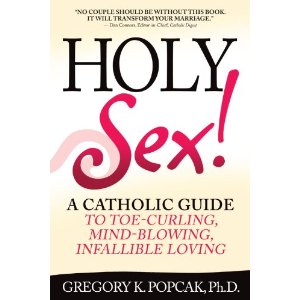
holysex

Despite what many popular authors propose, a new study finds that more sex does not necessarily lead to greater relationship satisfaction. In fact, in the particular study, couples who had more sex at the researchers request experienced a slight decrease in both sexual and general relationship satisfaction.  In the words of the authors of the study…

“The couples instructed to increase sexual frequency did have more sex. However, it did not lead to increased, but instead to a small decrease, in happiness. Looking further, the researchers found that couples instructed to have more sex reported lower sexual desire and a decrease in sexual enjoyment. It wasn’t that actually having more sex led to decreased wanting and liking for sex. Instead, it seemed to be just the fact that they were asked to do it, rather than initiating on their own.”

Emotional Intimacy Drives Satisfaction

On the one hand, it makes sense that couples who are told to do anything would find it less pleasurable than if that activity emerge more naturally from their relationship, but I wonder if more isn’t going on here.  In my book,  Holy Sex! I note other research that ties sexual satisfaction not so much to frequency, but to the degree of emotional intimacy a couple enjoys.  For instance, last week I reported the results of a study showing that couples who experiences high levels of emotional intimacy can manage differences in levels of sexual desire better than couples who have lower levels of emotional intimacy. These couples may not be in the mood for sex, but because they feel emotionally close to their partner, they don’t mind extending themselves–at first–for their partner’s sake, but then they end up enjoying themselves as well.   Researchers refer to this positive relationship quality as “sexual communal strength.” That is, the ability to be sexually generous, even when one isn’t in the mood, without feeling taken advantage of and even being able to enjoy the experience despite not starting out in the same place.  Sexual communal strength is directly related to the degree of emotional and spiritual intimacy a couple enjoys.

Use = Shame & Shutting Down

I wonder if what this study shows isn’t the opposite.  Couples who have lower levels of emotional intimacy will often feel resentful about increased sexual intimacy.  From the perspective of the theology of the body, couples in this situation often intuit that they are not so much experiencing  more a loving act as they are feeling like they are being used as an object of gratification.  Because we were not made by God to be treated as objects, we naturally rebel against being treated that way–even when we don’t consciously realize we’re doing it.   Couples with lower emotional intimacy tend to think of sex as scratching an itch–something they do if they feel the urge for it.  There isn’t anything wrong with this as far as it goes–even St. Augustine acknowledged this function of sex as being appropriate to marriage.  Even so, the more lovers think of sex as scratching an itch, the more they both tend to see themselves as things being used to scratch each other’s itch rather than persons being invited into a deeper, more intimate relationship with one another.  The more we feel used the more we experience a sense of shame that makes us shut down and withdraw so that we can protect ourselves from being treated as objects.  Sometimes this happens consciously, sometimes not, but humans almost universally have a powerfully negative reaction to even the perception that they are being used and they automatically close up in an effort to protect their sense of dignity as persons.

The Take-Away

I think it would have been interesting if researchers in this most recent study had controlled for emotional intimacy.  Regardless, the take-away for readers of this blog is that more sex doesn’t necessarily equal a better relationship.  If you want both better sex and greater relationship satisfaction, you have to cultivate emotional intimacy by making regular time to work, play, talk, and pray together every day so that you can build up the shared body of experiences that lead to deeper levels of intimacy, shared connection, and mutual understanding and respect.

For more information on how you can have a more passionate, intimate, affirming sexual relationship in your marriage, check out Holy Sex!  The Catholic Guide to Toe-Curling, Mind-Blowing, Infallible Loving.