
Liar, Liar, Pants on Fire! 9 Signs They’re Not Telling the Truth (AND 3 Things You Can Do About It).

Shutterstock

Shutterstock

New research suggests that, rather than going with our gut to know whether someone is being truthful or not, it is better to focus on a particular cue, like how hard someone has to think about what they’re saying or how much what they are saying squares with what we know to be true.

In general, studies find that the average person has a slightly better than even chance (54%) of detecting a lie from a stranger.  This goes up to 60% for people who are trained. Of course, the closer you are to someone, the more likely it is you also know the “tells” that indicate that they are not being honest.  Likewise, you can increase your skill by becoming aware of the general cues that often attend lying behavior.  For instance…


  • When questioned, deceptive people generally want to say as little as possible. Researchers initially thought they would tell an elaborate story, but the vast majority give only the bare-bones. Studies with college students, as well as prisoners, show this.
  • Although deceptive people do not say much, they tend to spontaneously give a justification for what little they are saying, without being prompted.
  • They tend to repeat questions before answering them, perhaps to give themselves time to concoct an answer.
  • They often monitor the listener’s reaction to what they are saying. They try to read you to see if you are buying their story.
  • They often initially slow down their speech because they have to create their story and monitor your reaction, and when they have it straight “will spew it out faster.” Truthful people are not bothered if they speak slowly, but deceptive people often think slowing their speech down may look suspicious. “Truthful people will not dramatically alter their speech rate within a single sentence.”
  • They tend to use sentence fragments more frequently than truthful people; often, they will start an answer, back up and not complete the sentence.
  • They are more likely to press their lips when asked a sensitive question and are more likely to play with their hair or engage in other “grooming” behaviors. Gesturing toward one’s self with the hands tends to be a sign of deception; gesturing outwardly is not.
  • Truthful people, if challenged about details, will often deny that they are lying and explain even more, while deceptive people generally will not provide more specifics.
  • When asked a difficult question, truthful people will often look away because the question requires concentration, while dishonest people will look away only briefly, if at all, unless it is a question that should require intense concentration.

There are actually three things that you can do to tease apart lies from the truth in those times that you aren’t sure whether someone is being completely honest…

  • Have people tell their story backwards, starting at the end and systematically working their way back. Instruct them to be as complete and detailed as they can. This technique increases the cognitive load to push them over the edge. A deceptive person, even a professional liar, is under a heavy cognitive load as he tries to stick to his story while monitoring your reaction.
  • Ask open-ended questions to get them to provide as many details and as much complete information as possible (“Can you tell me more about…?” “Tell me exactly…”). First ask general questions, and only then get more specific.
  • Don’t interrupt, let them talk and use silent pauses to encourage them to talk.

The most important thing to remember is that trust is a critical part of healthy relationships.  Whether or not you can “prove” wrongdoing on the other’s part, the feeling that you can’t trust, say, your spouse or your child, is a significant problem in and of itself that deserves attention.  If you can’t figure out how to rebuild the trust in your relationships on your own, don’t wait.   Seek professional help to heal the hurt before suspicion undermines the relationship altogether.
 

RAISE FAITHFUL KIDS! SAVE 50% on a Great New Resource!

discovergod
If you or your parish are looking for a way to empower families to foster intentional discipleship in the home, I wanted to let you know about a special offer.

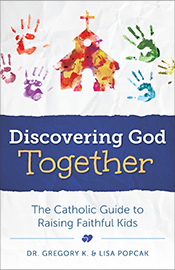
Several parishes have expressed an interest in giving my and my wife’s latest book, Discovering God Together: The Catholic Guide to Raising Faithful Kids as a gift to parents for Baptism, First Communion, and Confirmation classes.

In light of this, Sophia Institute Press has offered a 50% discount to any parish or group who was interested in purchasing this title in bulk.

The book unpacks the latest research on what it takes to pass the faith on to the next generation and offers tons of practical tips for…

-Meeting the spiritual needs of children at every stage of faith development.
-Developing a meaningful family prayer life
-Helping children cultivate their own meaningful prayer life/relationship with Christ.
-Identifying your family mission/charism.
-Enabling children to identify their mission/charism.
-Tools for facilitating a secure relationship with God (and how parents can begin to heal their own spiritual wounds).
-How families can help children get more out of all the sacraments.

And much, much more!

If you’re interested in learning more, please click the link below or contact Sophia Institute Press directly at 1-800-888-9344

What’s YOUR Catholic Marriage IQ? Take the Quiz!

Shutterstock

Shutterstock

Do YOU know the truth about the Catholic difference in marriage?

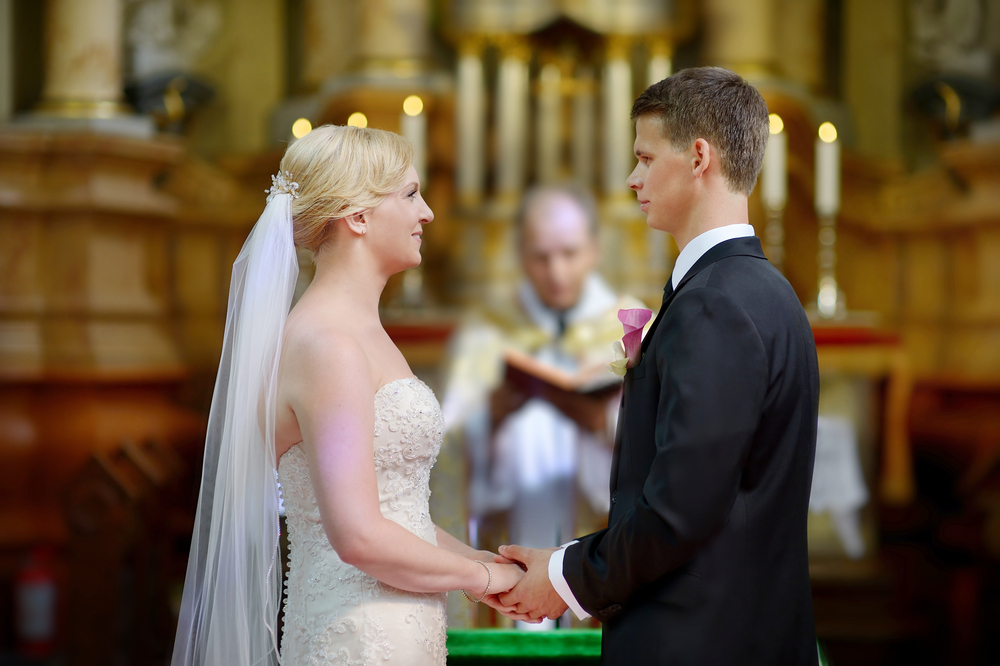
One thing that became stunningly clear in light of the recent Synod on the Family is how little people really understand the Catholic vision of marriage — perhaps most especially Catholics! Test your Catholic marriage IQ with the following questions.

Q: What is the primary job of the Catholic husband and wife?

A: The primary job of a Catholic husband and wife is to help get each other to heaven. That’s a big part of what it means to say that marriage is both a sacrament and a vocation. When a husband and wife get married in the Catholic Church, they are affirming that they believe God has chosen them to play an essential role in each other’s sanctification — second only to the saving power of Jesus Christ. Incidentally, this is also a big reason the Church frowns on divorce. To actively pursue divorce is to say, “I refuse to play the role God chose me to play in helping this person get to heaven.” Of course, God can still get them there, but divorce deprives them of a major support. The only way to step out of this role validly is to find — through the process of an annulment— that God really didn’t choose you to play this role after all.

Q:  True or False. You and your spouse get to say what your marriage should look like.

A: False. That’s why Catholic couples are forbidden to write their own marriage vows. Of course, every marriage is different in some ways, but rather than defining the nature of marriage for themselves, as many secular couples do, Catholic couples implicitly agree to live marriage as the Church defines it. Why? First, because they believe that the Catholic Church has a lot to teach them about what it means to be fully loving people and second, because they want to be living witnesses of the freeing truth of the Catholic vision of love and sexuality. Every Catholic couple is supposed to be a living, breathing sign that the Catholic understanding of love and sex is the path to true freedom, joy and fulfillment so that they can call the whole world to Christ through their example.

Q: True or False. Marriage is the sacrament of sex.

A: True. Every sacrament depends on a physical sign that actually causes what it represents. Baptism uses water to signify the actual cleansing of the soul. The Eucharist transforms bread and wine into spiritual food. Sacramental marriage turns sex into a spiritual reality that, as Pope Benedict XVI wrote, “rises in ecstasy toward the divine.” Just like you can’t baptize without water, a couple cannot be validly married unless they are capable of having sexual intercourse. In a sacramental marriage, sex actually causes the spiritual union physical intimacy represents. Likewise, it allows couples to be co-creators of life, it serves as a physical reminder of the passionate love God has for the husband and wife, and it helps to sanctify the couple by challenging them to embrace the vulnerability they experience in each other’s arms and to grow in virtue as they work together to build the intimate partnership that enables them to work for each other’s good in and out of the bedroom. (To learn more check out Holy Sex!  The Catholic Guide to Toe-Curling, Mind-Blowing, Infallible, Loving.)  Incidentally, when Catholic couples ask, “What gives the Church the right to tell us what to do in the bedroom?” The answer is that the couple did — when they stood at the altar and promised to live the Catholic vision of love. (Check the small print.)  CONTINUE READING