

Got Spiritual Direction? New Resource Helps YOU Get the Most from Your Spiritual Life!

Image: Shutterstock

Image: Shutterstock

You don’t have to be a saint to want to draw closer to God or have more confidence in what he wants for your life.

Spiritual direction is an important ministry that helps people at every stage of the spiritual walk draw closer to God and have more confidence in his will for their lives.  In fact, the Church acknowledges the incredible value of spiritual direction and encourages anyone who is serious about their spiritual walk to seek a competent, qualified director (Catechism #2690). The problem is finding a person who is both qualified to be a spiritual director (in training and spiritual maturity) and who has the time to see you. There simply  aren’t enough clergy to go around  in the first place, and of those who are, many either don’t have the time or training to do ongoing spiritual direction.

What’s a sincere Christian to do?

A New Service for YOU

In addition to our well-respected Catholic Tele-Counseling practice, the Pastoral Solutions Institute now offers telephone based Catholic Spiritual Direction Services.  Now, whatever your state in life, whatever your place in your spiritual walk, and wherever you are in the world, faithful, competent, compassionate spiritual direction is as accessible as your smartphone.
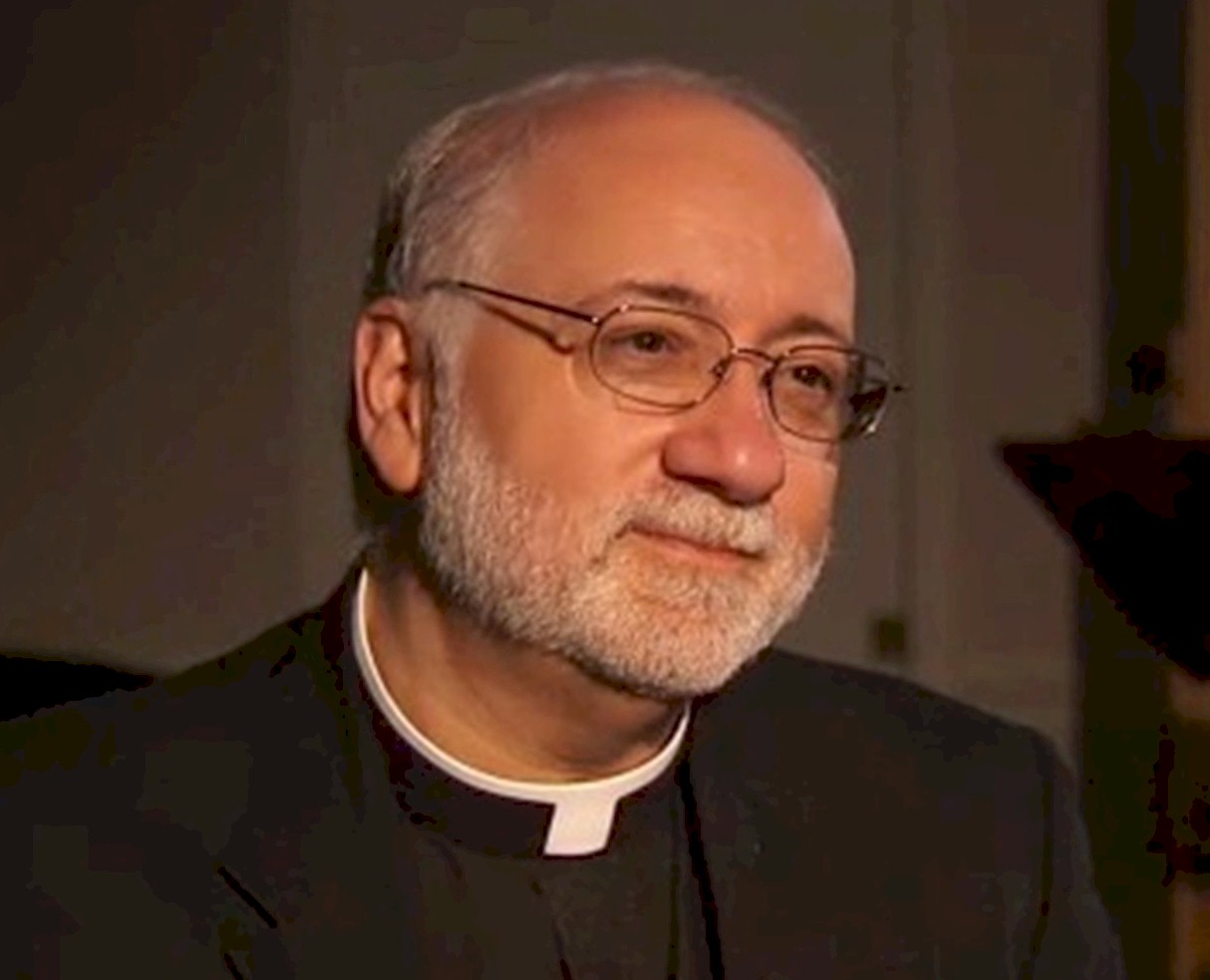
Deacon Dominic Cerrato, Ph.D.

Deacon Dominic Cerrato, Ph.D.

Deacon Dominic Cerrato, Ph.D. heads up the Pastoral Solutions Institute’s Spiritual Direction Program.  Deacon Dominic combines nearly 30 years of experience in pastoral and catechetical ministry with a Ph.D in theology and a graduate certificate in bioethics. Ordained in 1995 as the first permanent deacon of the Diocese of Steubenville, he is the founder of Diaconal Ministries. In these roles,  Deacon Dominic has served for many years as a popular speaker, trainer, and spiritual director for priests, and deacons, and seminarians throughout the country. In addition to his scholarly writing, he is the author of, In the Person of Christ the Servant, a book that explores the nature of the diaconate and is used in many diaconal training programs across the country. He has also been a popular guest on many Catholic radio and television programs (Please see his full bio below).

For more information on the Pastoral Solutions Institute’s Spiritual Direction Services, including rates and availability,  I invite you to send a message to SpiritualDirection@CatholicCounselors.com and/or review both the FAQ and Deacon Dominic Cerrito’s full bio below.

SPIRITUAL DIRECTION FAQ

What is spiritual direction?

The purpose of spiritual direction is to enable you to listen and respond more effectively to God’s personal communication in your life. This, in turn, cultivates the interior spiritual life where you meet the Holy Spirit one-on-one and true transformation takes place. The ultimate goal of spiritual direction is to deepen your intimacy with Jesus Christ and to help you live the Christian life more effectively. It is about helping you place your life more fully under the dominion of the Holy Spirit who is the primary spiritual director.

What does a spiritual director do?

The Pastoral Solutions Institute’s spiritual direction program exists to assist you in your conversation with God. Your spiritual director will help you be more attentive to the promptings of the Holy Spirit and encourage your progress in the spiritual life,  A good spiritual director is careful not to come between you and God.  Instead, the director plays a supportive role in your relationship with God by encouraging you to engage in a process of ongoing spiritual growth that is grounded in an active parish life, supported by a commitment to prayer in its many forms, enlivened by the reading and study of Scripture, deepened through ongoing catechetical formation, and nourished through frequent use of the sacraments—especially Reconciliation and the Eucharist.

Can spiritual direction work over the phone?

Absolutely. In fact, telephone-based spiritual direction helps facilitate a major goal of spiritual direction; namely, that the spiritual director should be as little a distraction as possible so that you can become more aware of the presence of God in your session rather than the presence of the director in the session.

What should I expect from spiritual direction through Pastoral Solutions?

The Church has long recognized that living the faith is not a “one size fits all” proposition. Just as there are a number of schools of spirituality within the Catholic tradition, there are a number of valid approaches to spiritual direction. The key is choosing one that best empowers you to discover the unique relationship God desires with you.

In your sessions, your spiritual director will adopt a contemplative posture; listening to both you and God.  As your director prayerfully attends to your time together, he will help you be attentive to and “stay with” the movements of God within the depths of your soul. In this experience, you will discover a safe harbor from which to explore and develop more particular spiritualties such as Marian, Ignatian, Carmelite, Dominican and Franciscan. As you progress in your work, your spiritual director will help you discover the spiritual model that is best suited to the work God is doing in your life.

Do I have to be “spiritually advanced”  to benefit from spiritual direction?

Absolutely not. All you need is a desire to take your spiritual life more seriously.  To this end, in addition to facilitating your ongoing conversation with God and looking at ways to deepen your spiritual life, your spiritual director will help you get more out of basic spiritual practices such as regular church attendance, participation in the sacraments, and a day-to-day prayer life.  Beyond these things, to get the full benefit of spiritual direction, the only other things you’ll need is a willingness to meet regularly with your director, and a sincere desire both for greater union with God and openness to the movement of the Holy Spirit.

Does the director tell the directee what to do?

Your relationship with God is sacred and personal.  As such you will always have the right to make the final decision about how that relationship should unfold.  Your spiritual director will certainly offer suggestions he prayerfully feels would be helpful for deepening your relationship with God but he will never tell you what to do. It is your spiritual director’s job to ask you questions that help him understand where you are at in your spiritual journey and give you the tools to discover the best way forward. Good spiritual direction respects your free will just as God does.

How often is spiritual direction necessary?

There is no strict timetable for spiritual direction though it should be regular. After the initial spiritual assessment period, where your director helps you take stock of your spiritual journey thus far, you and your director will decide on the frequency that best serves you and your goals. However often you decide to meet (monthly at minimum), it will be important to be faithful to your time together.  Your commitment builds a relationship of trust between you and your spiritual director so that,together, you may be more responsive to ways God is working in both of you.

How is spiritual direction different from counseling?

Spiritual direction can certainly be a healing process.  But though spiritual direction can be a helpful part of recovery from emotional problems or relational conflict, the primary goal of spiritual direction is not recovery from problems so much as it is deepening your relationship with God, attending to God’s will more effectively, and being more confident in the ways God is working in and through you in your present circumstances.

Beyond this, where counseling is more directive, focused on teaching techniques, building skills and concentrated on resolving problems, spiritual direction is most interested in helping you develop the quiet place in your heart where you can encounter God more personally and receive whatever blessings, graces, and wisdom he wishes to share with you.

Is it ever advisable to undergo counseling and spiritual direction at the same time?

Depending on their particular circumstances and needs, a directee/client will often choose either spiritual direction or counseling.  Even so, there is nothing that would prevent you from experiencing the benefits of both as they are intended to be complementary to each other.

Along these lines, it may also be the case that, in the course of spiritual direction, a director may make a referral to counseling or, in the course of counseling, a counselor may make a referral to spiritual direction.  In such an event, you would be free to work with a director or counselor of your choosing—whether or not they were associated with the Pastoral Solutions Institute.  That said, Pastoral Solutions Institute therapists and spiritual directors are part of the same team.  We learn from each other, value each other’s input, and work together closely to help our clients achieve their goals in the most efficient way possible.

Are the sessions confidential?

Yes. Any disclosure that a directee makes during the sessions is strictly confidential. The director may never reveal it or use it. The only possible exception to this standard of confidentiality would be the case of grave, immediate, or mortal danger involving the directee or another person.

Do I have to be Catholic to have spiritual direction?

No. All Christians are welcome. While the Pastoral Solutions Institute spiritual direction program is deeply rooted within the Catholic tradition, the directee need not be Catholic. Accommodation can be made to direct the directee from a more general Christian approach.

Is there a charge for spiritual direction?

Yes.  Spiritual direction is a demanding profession that requires many years of  academic and personal preparation to do well.  That said,  we have set the cost of our service so that almost anyone could afford to take advantage of these services.  For rates and availability, please send a request for additional information to SpiritualDirection@CatholicCounselors.com .


ABOUT DEACON DOMINIC

Deacon Dom

Deacon Dominic Cerrato offers spiritual direction under the Pastoral Solutions Institute and is Director of Diaconal Ministries. Formerly, he served in full-time pastoral ministry specializing in adult formation. He has also taught theology at Franciscan University of Steubenville and Duquesne University of the Holy Ghost along with ethics at Thomas Nelson Community College. While at Franciscan University, Deacon Dominic also established and developed the Distance Learning Masters in Theology Program. He has nearly 30 years of experience in catechetical and pastoral ministry on both the diocesan and parish levels.

Deacon Dominic possesses a BA in Theology from Franciscan University, a MA in Theology from Duquesne University where he also completed his Ph.D. course work with a concentration in healthcare ethics. In 2009, he was awarded a Ph.D in Theology from the Graduate Theological Foundation. Ordained in 1995 as the first permanent deacon of the Diocese of Steubenville, Deacon Dominic has developed a number of formation/catechetical programs included a highly successful program for returning Catholics that was featured in USA Today and Our Sunday Visitor. He is a national speaker and author. He and his wife Judith have been married for 34 years and they have seven children and six grandchildren.

Antidepressants for a Bad Marriage Yield Depressing Results.

Image Shutterstock

Image Shutterstock

New research shows that doctors regularly diagnose patients as “depressed” when they complain about marital and relationship problems.  The problem is, being sad about a bad marriage isn’t depression, and anti-depressants can’t treat marital woes.

From PsychCentral

New research finds that psychiatrists nearly always respond with prescriptions for antidepressants when clients complain of bad marriages.

The medical definition of depression does not support the assumption that people struggling with their marriage or other domestic issues are depressed and require antidepressants, said Dr. Jonathan M. Metzl, professor of sociology and medicine, health, and society at Vanderbilt University and the study’s lead author. 

The study, conducted using a Midwestern medical center’s records from 1980 to 2000, appears in the current issue of the Yale Journal of Biology and Medicine. READ THE REST

If you are struggling with marriage and family problems, be sure to get the right kind of help.  Medication can’t cure relationships problems. Marital Counseling can. But remember, not every therapist or psychiatrist is trained as a marriage or family therapist even if they say they do marriage and family therapy!  The success rate for therapists who “do marriage and family therapy” is about 30% while the success rate for therapists who have trained as marriage and family therapists (which includes completing internships in marriage and family therapy and receiving professional supervision) exceeds 90%!  To learn more about getting the help you need, check out When Divorce is NOT An Option: How to Heal Your Marriage and Nurture Lasting Love or contact the Pastoral Solutions Institute (740-266-6461) to learn how our Catholic Tele-Counseling Practice can give you the tools you need to live a more joyful, grace-filled, passionate marriage and family life.

Parents vs. iPhone: A Problem of Liturgy?

Image: Shutterstock

Image: Shutterstock

A guest blog by Pastoral Solutions Institute clinical counseling associate, Dave McClow, M.Div., LMFT, LISW.

A 13-year-old boy, Peter, was anxious, even compulsive, melting down whenever his parents asked something of him, especially to get off his iPhone or iPad and re-engage in the human race–specifically, his family life.  I know this is not extremely uncommon.  I was working primarily with the mother, who was having difficulty engaging her husband.  He seemed too busy, and she hesitated to bother him.  Having low expectations of men is a chronic problem in my pastoral counseling practice, especially around family and spiritual life.  Men live up to high expectations at work, but not at home.  While the wife believed that leaving him alone was loving, generous, and kind, it was actually the opposite—it was not working for his good, for love, and it was not helping him get to heaven.  Low expectations do not help a man become the best version of himself.  He needs a challenge; he needs to be needed! But he also needs to know what to do without being nagged.

What should we expect from men?

The Abba Prayer for Men at AbbaChallenge.com answers this in an outline form.  In the prayer I suggest that the summit of being a man is spiritual fatherhood lived out in chivalry as priest, prophet, and king.  I would like to focus on our priestly role through which we link the human and the divine.  What does this mean?  For one thing, when we love our friend, spouse, or kids—working for their good—we connect or link them to God, because God is love.

Priests enact liturgy

As priests, all baptized men are called to enact liturgy, though certain Church liturgies such as the Mass are reserved for the ordained priesthood.  Liturgy is the means through which God forms his people into his children, his disciples.  Liturgy is built into creation, the story of which ends in a liturgical event, the Sabbath rest.  Fathers, before they worshipped the golden calf in the desert (Ex. 32), were the priests who led their families spiritually.  So what is the liturgy of the baptized priest?  I think liturgy is a ritual and/or routine that communicates love.  If you are married and/or have kids, you are the priest in the domestic church!

Everyday liturgy

We are perpetually engaged in liturgy, a/k/a, service or work:  we have morning and bedtime routines, customary hellos and goodbyes, birthday celebrations, anniversaries, etc.  Not all rituals and routines communicate love, however.  So if we have problems in our relationships, as with Peter, we need to evaluate and reform our liturgies so our love is better experienced by our kids and spouses.  Dr. Greg Popcak, in an excellent book, When Divorce is Not an Option, cites over 60 years of research and hundreds of studies showing that rituals of connection increase satisfaction in life and relationships and significantly decrease depression, substance abuse, promiscuity, and behavioral problems.  The liturgy of the domestic church is powerful formation!

Popcak indicates four areas for rituals and routines that promote connection:  pray, work, play, and talk time.   There should be a daily 5-to-10-minute version and a longer weekend version.

Pray:  Shockingly, only 17% of Catholic couples actually pray together, according to a recent CARA study.  If you are married, pray with your wife!  If you need help getting started, keep it simple, picking a few intentions and saying an Our Father, a Hail Mary, and a Glory Be.  Add more as your comfort level increases.  Pray with your children.  Fathers praying with and for their kids are immensely powerful!  Do it!  Certainly go to Mass every week and to confession with your family each month.

Work:  These are not chores you do separately, but things you do together, such as preparing meals, setting the table, or cleaning rooms together with your wife and/or kids.

Play:  Try playing cards, taking a walk, reading aloud together, or wrestling with the kids!  Family game night or date night with the wife are weekly versions.

Talk:  Family meals are a starting point.  You can ask what was the high point and low point of everyone’s day.  Driving with teens can help them open up.  For more suggestions, get the book!

Let’s acknowledge our current liturgies and pick one area to work on to more fully live out our baptized priesthood.

What happened to Peter?  I worked with both parents and told them they needed to reform their liturgy with their son.  I also stressed that it would be more powerful coming from Dad.  When Dad knew what to do, he started with ping-pong and added other activities where they could talk more.  In two weeks Peter was a different kid—not perfect, but much more open and following his parents’ requests.  If you find yourself saying this is typical teenage behavior, you have ineffective liturgies in place.  In the battle of liturgy vs. the iPhone, the right liturgy wins!  The right liturgies communicate the love you actually intend.  This is the message our culture—and your kids and wife—are aching to hear and experience.

When Daddy Doesn’t Go To Church….

Image: Shutterstock

Image: Shutterstock

I was honored to be asked for input on a terrific article by Marisa Sandora at For Her on this painful topic.  Here’s a sample.

So how can those of us in this situation try to convince our non-practicing spouse to attend church services? “The same way we get our spouse to do anything,” says author and therapist Dr. Gregory Popcak. “We explain how important it is, we insist that we be taken seriously, and we refuse to let it go.” Popcak is the executive director of the Pastoral Solutions Institute, an organization dedicated to helping Catholics find faith-filled solutions to tough marriage, family, and personal problems. He’s written more than a dozen books integrating Catholic theology and counseling psychology, including Discovering God Together: The Catholic Guide to Raising Faithful Kids.

“Research on couples who experience faith differences shows that when there is conflict about church, it rarely has anything to do with religion,” he says. “It is all about respect. Respect involves more than being nice to each other. Ultimately, it involves trying to see the truth, goodness, and beauty in all the things the other person finds true, good, and beautiful. Couples who manage faith differences well usually don’t see eye-to-eye on religion, but they work hard to try and see what their partner finds good, true, and beautiful about their beliefs and religious practices.”

Modeling respect and generosity in every aspect of the relationship, not just religion, is the key, stresses Popcak.

Deacon Doug Kendzierski of the Archdiocese of Baltimore, who’s been married for 27 years and has three grown daughters, echoes this advice, saying honest communication is key. “Suppressing priorities and feelings is not only dishonest, but ultimately harmful. At the same time, a good relationship is not about “convincing,” it’s about explaining and understanding,” he says. “You should be honest about the importance of the family unit at church (i.e. public unity, example for your children, supporting you, togetherness, etc.). Be careful not to be judgmental, merely open and honest about the effect on you, and your concerns regarding the potential impact on the children and the family. Beyond that, prayer is the most effective approach; don’t discount the power of prayer.” READ THE REST

The only other thing that I would add that didn’t make it into the article is that if you are attempting to address this issue in your marriage and you are becoming more and more aware of my above point–that you aren’t really dealing with a religious issue as much as you are dealing with a spouse who really doesn’t respect you and this plays out in many other areas of the relationship where there are differences of opinion–you will almost always need to seek professional help to heal the marriage and, ultimately, resolve the spiritual issue as well.  Why?  Because when one is married to a spouse who refuses to see the value in your point of view, you don’t have the influence you need to be able to change the marital dynamic on your own.  It takes having someone else who can provide  a reality check for the disrespectful spouse to get that spouse to see what they are really doing.  The sooner you get help for this issue, the better, because the stakes–your children’s future faith–are too high.

For more information on books and faithful counseling resources, follow the links in the article above.

New Study Finds, “More Church = Less Porn”

Image Shutterstock

Image Shutterstock

From PsychCentral.

A new study finds that attendance of religious services by young people is associated with a reduction in viewing pornography over time.

The study findings appear in the Journal of Adolescence.

“We were able to determine that there is a barrier effect at play wherein religious social control encourages adolescents to view less pornography over time,” said Kyler Rasmussen, lead author of the study and a Ph.D. student in the University of Calgary’s Department of Psychology.

“This increase in pornography consumption as adolescents get older isn’t as drastic among those who attend religious services. We can see that religious attendance is a factor in shaping the trajectories of pornography viewing in adolescents.”

Rasmussen added, “Some might see it as a vindication of the role of religion, in that it can shape the behavior of young adolescents in a positive way.”

…So what is it about attending religious services that would help steer adolescents away from viewing pornography? “People in religious communities learn that there are expected patterns of behavior,” says Bierman.

“It may be the notion of a divine significant other who watches over them and there may also be a social support component. When you become integrated within a moral community where pornography is used less often and is, in fact, discouraged, this may shape and deter pornography usage. There’s a kind of social control function at play.”  Read the full article here.

To discover more faithful ideas for raising loving, moral, godly, porn-resistant kids, check out Beyond the Birds and the Bees:  Raising Sexually Whole and Holy Kids.