


Assertive Isn’t Selfish: A Catholic Guide to Healthy Love

By Dr. Gregory Popcak

The Theology of the Body reminds us that Christian love is not meant to be one-sided. While we are certainly called to be generous, sacrificial, and attentive to the needs of others, we are not called to ignore or suppress our own needs. In fact, St. John Paul II taught that the key to healthy, holy Christian relationships is “mutual self-giving.” Love flourishes when everyone involved is committed to giving what they can for the good of the other—and to receiving that love in return.

One of the biggest misunderstandings Christians struggle with is the idea that acknowledging our needs—much less asserting them–is somehow contrary to living an authentic Christian life. But TOB teaches us something very different. God is the author of our needs. A need is not just something required to survive; it is anything necessary for us to flourish as the persons God created us to be. Emotional connection, respect, rest, affection, support, and meaning are not luxuries—they are part of God’s design for human life.

When our legitimate needs are met, we thrive. And when we thrive, God is glorified in our flourishing. This means it is not only appropriate but healthy to expect that the people who say they love us will be responsive to our needs, just as we strive to be responsive to theirs. Mutual responsiveness is not selfishness; it is the very structure of love.
This is where the distinction between assertiveness and selfishness becomes essential. A selfish person is focused exclusively on themselves. They want what they want, how they want it, and when they want it, with little concern for how that affects others. Christian assertiveness looks very different. A responsible, assertive Christian is clear and honest about what they need, but also remains flexible and respectful about how and when that need is met. The goal is not control; it is communion.

TOB reminds us that we were created for intimate communion with God and with one another. Intimacy cannot exist where needs are hidden, denied, or dismissed. True closeness grows when we are able to say, “This is what I need,” and when the other person can respond with generosity and care. Likewise, love deepens when we are willing to hear the needs of others without becoming defensive or dismissive.

Of course, expressing needs does not guarantee they will always be met perfectly or immediately. But consistently silencing ourselves out of fear, guilt, or a mistaken sense of holiness leads to resentment, burnout, and emotional distance. That kind of self-erasure does not reflect Christ. Jesus gave Himself completely—but He also rested, withdrew to pray, asked for support, and allowed others to minister to Him. Mutual self-gift always includes mutual care.

Healthy Christian relationships are not about keeping score or demanding perfection. They are about a shared commitment to help one another become more fully alive. When we learn to express our needs clearly and charitably, listen to the needs of others with compassion, and work together to find solutions that respect everyone involved, we begin to experience the kind of love God intended from the beginning.

In that kind of relationship, no one disappears. Everyone is seen. Everyone is invited to give—and to receive. And in that mutual self-giving, the love of God becomes visible in the world.

If you would like support it making this change in your life or relationships, reach out for personal support from our pastoral counselors at CatholicCounselors.com.

So This Is Love – How To Have a More Joyful Marriage

Life can get busy and we tend to let the distractions and work of every day life take precedence over our relationships. Although this is a common and often natural tendency, it can really lead to a decrease in the joy and love that we experience in our marriage on a daily basis. 

Working on your marriage is one of the most important ministries a lay person can be involved with.  God wants to use your marriage as a sign of the love he has for his bride, the Church.  

Your marriage doesn’t have to be perfect and problem-free for God to be able to use your marriage this way, but you do have to have to be committed to working together to help each other become the husband and wife God is calling you to be. Doing this work allows God both to satisfy the deepest longings of your own heart for a love that lasts, but it allows God to show the whole world that when two people love him first, amazing things can happen.  

Working on making your marriage more loving, more joyful, and more intimate, isn’t selfish. It’s the role married couples play in God’s plan for saving the world, which is exactly why marriage is a vocation.

Here are three key ways to cultivate a more loving, joyful, and intimate relationship!

1. Meaningful Couple Prayer–God is the source of a joyful marriage and God will teach you to have a more joyful marriage through meaningful couple prayer. Resist the temptation to simply say words at God. Actually bring your marriage to him. You might say something like, “Lord, we give you our marriage today. Help us look for opportunities to cherish each other, to be the spouses you want us to be to each other and to make our marriage a priority.” However you prefer to pray, be intentional about bringing your marriage to God and asking him to teach you how to love each other with the love that comes from his heart.

2. Daily Check-Ins–Take 5 minutes a day to sit down with your spouse, reflect on how close you feel to each other, and suggest one thing that might make you feel just a little bit closer. For instance, you might say, “It’s been a busy day with the kids and I’m just feeling a little disconnected. I’d love it if we could get a walk in this evening?” Or, “I feel great about us, but I miss getting some one-on-one time, let’s plan a date for sometime soon.” Just five minutes a day to reflect on how you both feel about your relationship and what you would both like to do to come a little closer can make the difference between a couple that maintains a strong connection through life’s ups and downs and a couple that slowly drifts apart without even realizing it. Make the time to check in with your spouse for even a few minutes and keep those lines of connection strong.

3. Make Your List and Check it Twice–Want to cherish each other more? Make a love list. Both you and your spouse should write down at least 25 things that make you feel cherished, cared for, and loved.  Simple things like, “I love when you hold my hand.”  “I love when you text me to say ‘I love you.’” “I love when you notice the dishwasher is full and empty it.”  Identify as many simple, loving acts, thoughtful gestures, or caretaking behaviors as you can and write them down. Then exchange the lists. Everyday, make it a point to do at least two simpler things on the list and one thing that takes a little more effort. Try to do something a little different everyday and don’t be slavish about the lists but use them as a springboard that inspires a little creativity.  Your love list will remind you not only that taking care of each other is the most important thing you can do all day, it will remind you that even a little thoughtfulness goes a long way to having a more joyful marriage.

For more ways to live a more joyful and loving marriage, check out For Better… Forever! at CatholicCounselors.com.
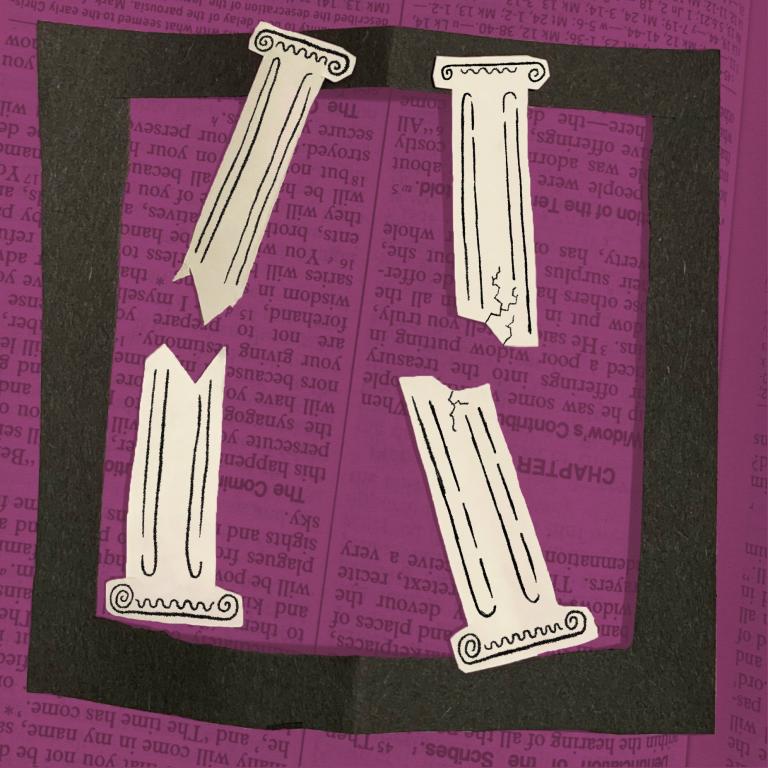
It’s the End of the World as We Know It (A Gospel Reflection for the Thirty-Third Sunday in Ordinary Time)

“…do not be terrified; for such things must happen first”

 
These words from Jesus, spoken in the midst of truly unsettling, apocalyptic-seeming predictions, are at once calming and baffling. He tells us all about the many awful things that will happen throughout human history – war, betrayal, natural disaster, the destruction of those things which our societies hold most sacred – and then basically tells us that we should relax anyway. Is He telling us merely to trust Him? Is He just insensitive to our plight?
I think it goes deeper than either option. In actuality, Jesus wants us to focus on the right things, regardless of what else is going on. Remember, he’s speaking to an audience ringing their hands over whether or not the liturgical salad fork is in the right spot. This is a people easily distracted by the pettiness of life, and Jesus is basically saying, “buckle up, fam. If this stresses you out, it’s gonna get a lot worse.”
But Jesus isn’t just trying to scare us straight, so to speak. What Jesus wants us to focus on instead, it seems, is the person right in front of us. How many of us, like the Lord’s audience in this Gospel, fret over trivial things while forgetting about what matters right now? We ask, “What if my kid doesn’t turn out right?” But Jesus asks, “How does your kid need to be shown love right now?” We ask, “What if I never get what I need from my spouse?” He asks, “But how can you show more love to your spouse right now?” We ask, “Will I be stuck in this dead end job forever?” He asks, “How can you use your dead end job to love somebody right in this moment?” To Jesus, it doesn’t matter what’s on the news or what’s falling from the sky or even what evil lies in your neighbor’s heart. What matters to Jesus is loving right now.
His words remind me of my favorite line from The Avengers“Until such time as the world ends, we will act as though it intends to spin on.” Or my favorite REM song: ‘It’s the End of the World as We Know it (and I Feel Fine)’. In a world where every message from the radio, the TV, and even unfortunately the pulpit tells us to worry about something that’s going to supposedly kill us sometime over the next 2-50 years, let’s listen to Jesus instead and ask ourselves: how can I love the person right next to me just a little better right in this moment?

Jacob Popcak, M.A., L.P.C. is an award-winning Catholic artist and a counseling associate of the Pastoral Solutions Institute. He can be contacted through CatholicCounselors.com.

Fear, Men, and The Locked Doors of Our Hearts

Guest post by Dave McClow, Pastoral Solutions Institute

Men are more wired to assess threats than women; maybe that is partly why the disciples hid in fear behind locked doors after Jesus’ crucifixion (see John 20:19-23).  Fear perceives the other as the enemy.  Fear underlies all sin—any attack on the dignity of the human person.  It becomes a problem when we fear the wrong people—like our spouses and kids.  It is not a new problem, since it dates back to the Garden of Eden and the Fall.  In fear, Adam and Eve covered themselves when they understood they could take advantage of each other, and they hid from God in the bushes.

Because God is love, we are a religion of love, as demonstrated by the greatest commandment and a new commandment.  Fear is the opposite of love: “There is no fear in love. Perfect love drives out fear” (1 John 4:18).  “Be not afraid” is a thread running throughout Scripture.  And it was a motto, of sorts, of St. John Paul II.

The Locked Doors of Our Hearts

The disciples lived in fear of the Jews, having locked the doors, and it was evening…isn’t this usually when our fears come out?  When we feel fear, we often lock the doors of our hearts, even to loving people, including Jesus.  So what hides behind the locked doors of your hearts?

Jesus appears to the disciples behind those locked doors.  He starts with “Peace be with you,” showing them his hands and side.  I am sure he does this to identify himself; but beyond that, he leads with his wounds.  This is an interesting leadership style, worthy of reflection in a culture that peddles “Never let them see you sweat.”  This motto, ironically, is a perpetual prescription to live in fear of exposure and…to sweat!

Jesus never imposes himself on us.  So we must invite him behind those locked doors of our hearts, where everything is bound and loosed (CCC 2843), into the ugliness where our fears, wounds, and sins have reigned.  For many men, this ugliness is the sin of pornography.  Fear and shame keep us from inviting him in. Satan is the Accuser, but he transfers this job to us, and we tend to cooperate by accusing ourselves!  The Devil’s name means “to separate,” especially from God and others; and separation results from self-accusation.  Freedom is found only in God’s presence.

How Does Jesus Come? 

Once invited, Jesus does not come as a King to judge in power, but as the King who heals—the wounded healer who leads with his wounds.  He comes as Priest to link our fearful hearts to his Father of love, or to Love’s second name, Mercy.  He comes as Prophet not to speak harsh words in love, but to speak the truth of Love Itself to the lies of our fearful hearts.

I imagine him entering my heart, absorbing my fears, pain, and darkness into the wounds in his hands.  But it is not enough to “sweep the house clean,” leaving it vulnerable; it must be filled!  So I imagine the wound in his side that gushed forth the water and blood of our Baptism and the Eucharist, pouring forth his love and mercy, filling the empty space with the fullness of God (cf. Eph. 3:14-21)!  Sometimes I don’t even know what his wounds are absorbing; I just know I calm down and am no longer fearful, and I feel grateful.  And I rejoice as the disciples do!

Loved and Now Challenged!

But he is not done! He continues, “Peace be with you.”  Each time, I understand this more.  Then he stuns with, “As the Father has sent me, so I send you.”  It means we must receive God’s love, as Jesus does—the Father gives himself totally, without reservation, to his Son, an echo of which is heard when the prodigal’s father tells his older son, “Everything I have is yours.”  We are loved first, now challenged.  We must work from love, never for love.

Jesus is sent as priest, prophet, and king, so we are sent as priest, prophet, and king.  We are baptized and made gods—not just adopted, but made sons of the Father through a nature change.  Then we are strengthened with other sacraments.

He is still not done! In his overwhelming generosity, Jesus breathes on them, saying, “Receive the Holy Spirit”—Love himself.  Of course the apostles receive a special authority to bind and loose here, but we are also given the Holy Spirit and must receive him to fulfill the challenge of love!

We fear being unlovable in our sins.  So the Father sends his Son in love as priest, prophet, and king.  We must invite him behind the locked doors of our hearts into those shame-filled rooms.  By his wounds, he leads and heals us to receive his peace.  Then he sends us out with the Holy Spirit as priest, prophet, and king to love others as spiritual fathers!  “As the Father has sent me, so I send you.”

Does My Husband Have a Right to Sex?

shutterstock_519161206

On her Facebook page, Rose Sweet, who has a wonderful ministry to divorced Catholics, posted the troubling story of a woman whose husband was cheating on her.  The couple’s pastor counseled the wife that her decision to place a moratorium on her sexual relationship with her husband as long as he was cheating on him actually placed an undue burden on her cheating husband and was driving him away further in part, because sex is a “right” of marriage.

A little clarification might be in order. Yes, according to the Church, sex is a “right” of marriage. But the Church defines “right” a little differently than the world does.

To say that sex is a “right” of marriage means that marriage is the right place for people to have sex. It does not mean you have a license to demand sex no matter what.

Marriage is the normative–that is, “right”–place for sexual love to be expressed between a man and a woman. Assuming a healthy, loving respectful relationship, this is true. It is also true, as St. John Paul observed that a couple who does not love, respect and cherish each other could very well commit the sin of adultery even in marriage by using each other as objects rather than loving each other as persons.

Assuming you have a healthy, loving, cherishing relationship, marriage is the right place for sexual love to be shared. If you don’t have that kind of marriage, then you have a right to stop having sex and start learning how to actually love each other.

Older texts on moral theology and canon law tend to use words like “right” and “marital debt” when discussing sex.  These words are technical terms and taking them at face value can lead to a lot of problems.

Properly understood, referring to sex as a debt that husbands and wives owe to each other means that, in a loving marriage, loving spouses do not have a right to withhold sex from each other.  As St Paul puts it in 1 Corinthians 7:5

The husband should fulfill his duty toward his wife, and likewise the wife toward her husband. A wife does not have authority over her own body, but rather her husband, and similarly a husband does not have authority over his own body, but rather his wife. Do not deprive each other, except perhaps by mutual consent for a time, to be free for prayer, but then return to one another….

All of this means that marriage is the right place for sexual love to be expressed–assuming the couple is living their marriage as the Church defines it. Namely, as an “intimate partnership.” (c.f., Gaudium et Spes).

But there is a deeper debt the married couple owes to each other that precedes sexual union. They owe each other the love, respect, cherishing that characterized their dating relationship—the relationship that continues to serve as the foundation for their marriage. Sex, if you will, is the house that sits on this foundation of love, respect, and cherishing. If the “foundation” (love, respect, and cherishing)  is bad, the “house” (sex)  is unsafe to live in. Why? Because if love, respect, and cherishing are absent, sex stops being sex and becomes mere lust and using. Marriage is no place for lust and use.

No one has a right to abuse someone else. No one owes someone else the “debt” of using them.

To discover more about how you can live the Catholic vision of love and sex in ways that are healthy and fulfilling, check out Holy Sex: The Catholic Guide to Toe-Curling, Mind-Blowing, Infallible Loving.

Coming Wed on More2Life: The God Connection (Plus, Win a Free Book! Details Below)

Coming WEDNESDAY on More2Life– The God Connection:  God loves you so much!  He is reaching out to you in so many ways.   Today on More2Life, we’ll look at the ways we can draw closer to God and how to remove the obstacles that stand in our path.

Call in at 877-573-7825 from Noon-1 Eastern (11-Noon Central) with your questions about experiencing God’s love more fully in your daily life.

WIN A FREE BOOK!  (Details below).

Wed Q of the D:  (Two-Fer.  Answer one or both).

1. When are you most aware of God’s love for you?


2. What makes you feel disconnected from God?


*Win a free book!  Every day you respond to the question of the day your name will be entered in a radio drawing to win a free book from the Popcak Catholic Living Library (over 10 titles in all)!  Again, each day that you respond you will get another chance at winning a free book in the drawing held every Friday on More2Life Radio.

This is a great way to get that title you haven’t read yet, or get a book for a friend who really needs it!  Enter every day to win.  This week’s featured title is:  God Help Me, This Stress is Driving Me Nuts!  Finding Balance Through God’s Grace. 

Winners will be announced on air and contacted by FB message following the drawing Friday afternoon.


Can’t get M2L on a Catholic radio station near you? YOU CAN STILL HEAR US! ~ Listen via our FREE AveMariaRadio IPhone or Android App (Check your app store!), ~ Tune in live online at www.avemariaradio.net ~ or catch our archived shows via the M2L Podcast (also at avemariaradio.net)